
Glute training has moved past squats and lunges alone. Gym owners, trainers, and serious lifters are now looking for equipment that isolates the glutes with control, and that is exactly where a standing kickback unit fits in. This guide breaks down how the unit works, why it belongs in a commercial training floor, how to use it correctly, and what to check before you buy one. Every point here is based on how standing glute isolation equipment is actually built and used in gyms, not on generic marketing language.
What Is a Standing Glute Kickback Unit and How Does It Work
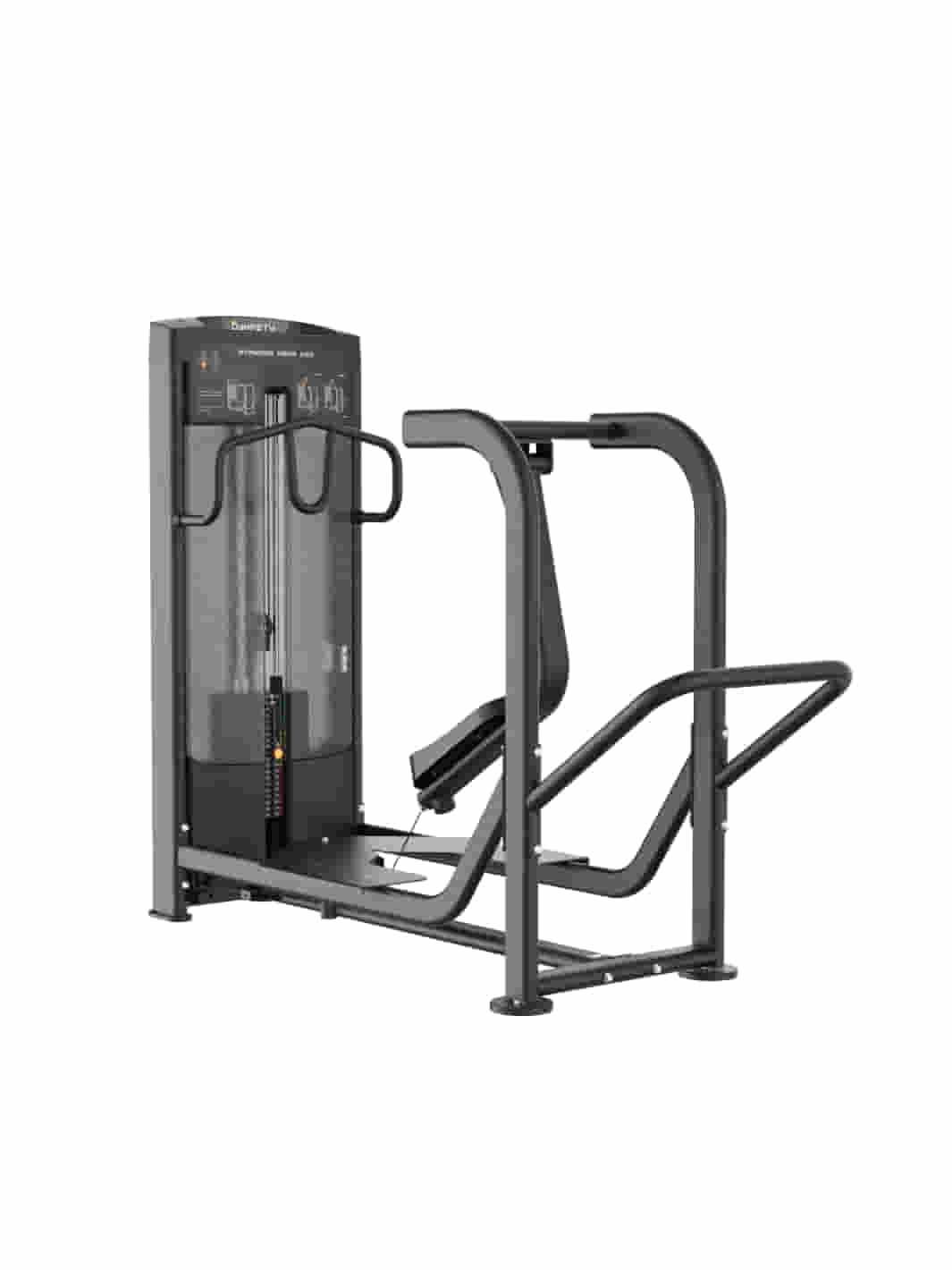
A standing kickback unit is a selectorized strength machine built to isolate the glute muscles through a hip extension movement. The user stands on a stable platform, places one foot on a lever or pad, and drives the leg backward and upward against resistance. This standing position removes momentum from the lower back and knees, so the load lands almost entirely on the glute muscle group instead of spreading across the whole posterior chain.
Most standing models, like the DRE8032 design used in commercial fitness lines, feature a wide platform for balance, multiple handle positions for different training angles, and a chassis built to handle repeated heavy use. A typical unit in this category has a net weight around 331 pounds, a maximum training load close to 232 pounds, and footprint dimensions near 89 inches long, 32 inches wide, and 71 inches tall. These numbers matter because they tell you whether the equipment can survive daily commercial traffic or whether it was made for occasional light use only.
The mechanism itself is simple: a lever arm connected to a weight stack or plate-loaded system, a footplate or ankle pad, and an adjustable range of motion. The simplicity is the point. Fewer moving parts mean fewer breakdowns, which matters a lot when a facility runs the equipment for ten or more hours a day, seven days a week, across dozens of different users with different body sizes and training habits.
Some models also include a small back pad or chest support for users who want extra stability while driving the leg through the full range. This extra support is optional in most designs but can help beginners feel more confident as they learn the pattern before they add real training load.
Why Gym Owners Are Adding Standing Glute Isolation Machines
Glute training used to rely almost entirely on free weights, resistance bands, or cable attachments. Those tools work, but they demand supervision, setup time, and technique correction from staff. A dedicated kickback unit removes most of that friction from the daily gym floor experience.
Members can walk up, set the pin or plate, adjust the platform, and start their set without needing a trainer to spot them through the movement. For a gym floor, that translates into shorter wait times at popular stations, fewer form-related injuries, and a piece of equipment that keeps members engaged with lower-body day instead of skipping it in favor of an easier machine.
Glute-focused training has also become one of the most searched fitness goals across age groups, from younger members chasing an aesthetic look to older adults working on hip strength for daily function. Having a machine dedicated to that muscle group gives a facility a visible, concrete answer to a very common member request, rather than pointing people toward a crowded cable station or a free-weight area where technique errors are common.
From an operations standpoint, this type of unit also acts as flexible commercial exercise equipment that pulls double duty across very different populations. It appeals to bodybuilders working on hypertrophy, to rehab clients working on hip stability under a therapist's guidance, and to general members who just want a shapelier, stronger lower body without a complicated routine. One machine, several very different training goals, which is part of why it earns its place on a crowded gym floor.
Key Features That Make a Standing Kickback Unit Worth the Investment
Not every kickback unit is built the same way, so it helps to know what separates a durable commercial piece from a light-use option before you commit budget to it.
Platform stability. A wide, non-slip standing platform lets the user keep their working foot free to move through the full kickback pattern without losing balance mid-set. This single feature affects both safety and how much weight a person can actually control through a full range of motion.
Multiple grip and handle positions. Different body heights and training styles need different hand placements. A machine with adjustable handles lets a shorter member and a much taller member both find a stable, comfortable stance without compromising their form.
Adjustable range of motion. Hip flexibility varies a lot from person to person. A machine that limits or extends the range based on the user's own mobility reduces strain on the lower back and hamstring, and it also lets rehab clients work within a safe, restricted arc.
Reinforced frame and chassis. Commercial floors see hundreds of reps a day across dozens of members. A heavier gauge steel frame, solid welds, and a stable base prevent wobble and extend the working life of the unit by years compared to lighter, home-grade frames.
Weight capacity that matches your member base. A machine rated for lighter loads will bottleneck advanced lifters fairly quickly. Checking the maximum training load before purchase avoids that problem months later when stronger members start complaining.
Low-maintenance moving parts. Sealed bearings, quality cable or lever pivots, and simple pin-loading systems cut down on repair calls, which is one of the biggest hidden costs in owning fitness equipment over several years.
Comfortable contact points. Padding on the ankle pad and any support pads should hold up under repeated use without cracking or losing shape, since replacing upholstery on a busy floor adds up in both cost and downtime.
Muscles Targeted by a Standing Kickback Machine
The primary mover in this exercise is the gluteus maximus, the largest muscle in the hip that drives hip extension. Because the standing position keeps the hips square and the working leg isolated, the machine also recruits the gluteus medius for stability and the hamstrings as secondary movers during the upward drive of each rep.
This combination is different from a squat or deadlift, where the glutes work alongside the quads and lower back in a compound pattern that spreads fatigue across several muscle groups at once. A dedicated kickback machine narrows the focus down to one muscle group, which is exactly why bodybuilders and physique athletes use it as a finishing or isolation movement after compound lifts are already done. It is also why physical therapists sometimes recommend a controlled kickback pattern for hip stability work, since the standing position mimics functional, real-world movement more closely than a lying leg curl or a seated hip machine would.
Because the exercise isolates one leg at a time, it also helps identify and correct strength imbalances between the left and right glute, something that is much harder to notice during bilateral movements like squats where the stronger side can compensate for the weaker one without either side realizing it.
Standing Kickback Machine vs Cable Kickback vs Bodyweight Kickbacks
People training glutes usually choose between three options: a dedicated machine, a cable attachment, or a bodyweight version done on the floor or with a resistance band.
Bodyweight kickbacks are accessible and need no equipment at all, but they cap out quickly in resistance and rely heavily on the user's own form discipline to keep working correctly. Without a stable base, many people compensate with their lower back instead of the glute, which reduces the benefit of the exercise over time.
Cable kickbacks add resistance and a fixed path of motion, which is an improvement over pure bodyweight work, but the standing balance still depends entirely on the user, and the ankle cuff attachment can slip or shift mid-set, breaking concentration and tension right when it matters most.
A standing kickback unit solves both problems at once. The platform handles balance, the lever arm handles the resistance path, and the adjustable settings let the user progress weight in small, controlled increments the way a leg press or leg curl machine would. For anyone serious about progressive overload on the glutes specifically, the machine format consistently produces a more repeatable, trackable workout than either of the other two options, week over week.
How to Use a Standing Kickback Machine Correctly (Step by Step)
Getting technique right on this machine takes only a few minutes to learn, but doing it correctly changes the entire outcome of the exercise and how much benefit a user actually gets from each session.
Set the resistance. Start lighter than you think you need. The isolated nature of this movement means the glute fatigues faster than it does in a compound lift like a squat.
Position your standing foot on the platform. Keep the standing leg slightly bent, not locked, and centered under your hip for balance.
Place the working foot or ankle against the pad. Adjust the starting position so your hip is close to neutral, not already extended before the rep even begins.
Hold the handles at a height that keeps your torso stable. Avoid leaning heavily forward, which shifts work away from the glute and onto the lower back instead.
Drive the working leg back and slightly upward, squeezing the glute at the top of the movement for a full second before returning to the start.
Control the return. Do not let the weight stack drop; lower it with the same control you used to lift it through the working phase.
Repeat for 10 to 15 reps per side, then switch legs and repeat the same process on the other side.
A common mistake is using too much weight and turning the movement into a hip-hinge instead of a controlled kickback pattern. If your lower back is doing most of the work by the end of a set, the load is too heavy or the platform positioning needs an adjustment before the next set.
Who Should Use a Standing Kickback Machine
This equipment works for a wide range of gym users, which is part of why it earns its floor space in most modern facilities.
Bodybuilders and physique competitors use it as an isolation finisher after compound lower-body training, targeting the glute directly when it is already pre-fatigued from squats or hip thrusts earlier in the session.
General fitness members use it for shape and strength goals without needing a trainer to coach free-weight technique every single session.
Rehab and post-injury clients use lighter loads and controlled range settings to rebuild hip stability under a physical therapist's guidance, often as part of a structured recovery plan.
Older adults benefit from the standing platform, which trains hip extension strength that directly supports balance and fall prevention, a growing focus area in senior fitness programming across many facilities.
Beginners get a low-technique-barrier way to strengthen a muscle group that is often underactive from long periods of sitting during the workday.
Commercial Exercise Equipment: Building a Complete Lower Body Training Zone
A single machine rarely stands alone on a gym floor. Facilities usually pair a standing kickback unit with hip abductor/adductor equipment, adjustable benches, and leg flexion or extension machines to build a full lower-body training zone that covers every angle of the hip and thigh in one connected area.
When sourcing commercial exercise equipment, weight capacity, frame durability, and warranty terms matter more than they do for home use, because the equipment sees far more daily wear across many different bodies and training styles. A facility manager comparing options should look at how the manufacturer rates maximum load, what steel gauge the frame uses, and whether replacement parts are available without long shipping delays, since a single worn cable or pin can take a popular machine out of rotation for weeks if parts are hard to source.
Selectorized lines built around a shared chassis design, like the series referenced earlier in this guide, also make it easier to standardize a training floor. Matching frame finishes, upholstery, and adjustment mechanisms across multiple machines gives a cleaner, more professional look and simplifies staff training on maintenance routines, since the same tools and replacement parts work across several machines instead of needing a different process for every unit.
A well-planned lower body zone also helps with member retention. When people can find every piece of equipment they need for a complete leg day in one area, they spend less time wandering the floor looking for open stations and more time actually training, which improves their overall experience with the facility.
Buying Guide: What to Check Before You Purchase
Before adding a kickback unit to a commercial floor or a serious home setup, run through this checklist so you know exactly what you are paying for.
Confirm the maximum training load matches your users. A facility with advanced lifters needs a higher max load rating than a studio focused on general fitness or rehab clients who typically train with lighter resistance.
Check the footprint against your available space. A unit near 89 inches long and 32 inches wide needs enough clearance for the user to step on and off safely, plus space for a spotter or staff member to stand nearby if needed during a session.
Look at the adjustability range. More handle positions and range-of-motion settings mean the machine fits more body types, which matters a great deal in a shared facility with members of very different heights and mobility levels.
Ask about frame warranty and part availability, especially for the lever arm and pin-loading mechanism, since these see the most repetitive stress over thousands of reps per month.
Compare net weight as a durability signal. Heavier machines, generally in the 300-plus pound range for standing kickback units, tend to use thicker steel and more stable bases than lighter competitors built for occasional use.
Ask the supplier about delivery and assembly support. Commercial equipment is heavy, and proper assembly affects both safety and how the machine performs over its working life, so professional setup is worth the extra planning.
Home gym owners researching this category often want to know what separates a home-ready unit from a full commercial one, and the answer usually comes down to the same checklist above, scaled to a smaller space. If your goal is simply to buy glute kickback machine for home gym use, a compact footprint and a mid-range weight stack are usually enough for personal use, while a facility serving dozens of members daily should prioritize the higher end of frame durability and load capacity instead.
Maintenance Tips for Long-Term Performance
Keeping a kickback machine running well for years does not take much effort, but skipping basic upkeep shortens its working life quickly and leads to bigger repair bills later.
Wipe down the platform and pads after each shift to prevent sweat corrosion on metal contact points, especially around bolts and welded joints. Check cable tension and pin mechanisms weekly if the machine sees heavy commercial traffic, and monthly for lower-traffic settings in smaller studios or home gyms. Lubricate the lever pivot points on a regular schedule based on the manufacturer's recommendation, and inspect the base bolts periodically, since standing platforms take repeated lateral force that can loosen hardware over time without anyone noticing until a problem shows up.
A facility that logs this kind of routine maintenance typically gets several more years of reliable service from a well-built unit compared to one that only reacts when something breaks, which usually costs more in downtime and lost member trust than the maintenance itself would have cost.
Programming a Standing Kickback Station Into a Weekly Routine
For most training goals, this equipment works best as a secondary or accessory movement rather than the first exercise of a session. Placing it after compound lifts like squats, deadlifts, or hip thrusts lets the glute work under load while it is already partially fatigued, which tends to produce a stronger isolation effect than starting cold.
A typical lower-body day might include four sets of a compound movement, followed by three to four sets on the kickback station per leg, and finished with a lighter isolation movement like a hip abduction exercise. Members focused purely on glute development sometimes dedicate an entire short session to hip and glute isolation work, cycling between the kickback station, abductor equipment, and a cable-based hip thrust variation.
Rest periods between sets on this machine can be shorter than on heavy compound lifts, usually 45 to 60 seconds, since the working muscle group is smaller and recovers faster between isolated sets.
Frequently Asked Questions
1. What does a glute kickback machine actually train?
It isolates the gluteus maximus through a standing hip extension pattern, with secondary activation in the gluteus medius and hamstrings, making it one of the most targeted glute isolation tools available on a gym floor.
2. Is a standing kickback unit better than cable kickbacks?
A standing kickback unit offers a fixed, stable platform and a controlled resistance path, which generally produces more consistent form and easier progressive overload than a cable attachment that depends entirely on the user's own balance.
3. How many reps and sets should I do on a kickback machine?
Most training programs use 3 to 4 sets of 10 to 15 reps per leg, adjusting load based on whether the goal is strength, hypertrophy, or rehab-focused stability work.
4. Can beginners use a standing kickback machine safely?
Yes. The guided platform and lever arm make this one of the more beginner-friendly glute exercises since it removes most of the balance and technique demands found in free-weight alternatives.
5. What is the difference between a kickback unit and a hip thrust machine?
A kickback unit trains hip extension from a standing position with one leg at a time, while a hip thrust machine trains both legs together from a seated or lying bridge position; many programs use both machines for complete glute development.
6. How much weight can a commercial-grade kickback unit hold?
Commercial-grade standing units typically support a maximum training load in the range of 200 to 250 pounds, though this varies by manufacturer, frame design, and weight stack configuration.
7. Where should I place a kickback station in a gym layout?
It works best near other lower-body isolation equipment, such as hip abductor and adductor machines and leg curl stations, so members can build a complete glute and hip training circuit in one connected area.
8. Do I need a trainer to use a standing kickback machine?
Not necessarily. The guided motion path reduces the technique errors common in free-weight glute work, though a quick form check from staff is still useful for new members during their first few sessions.
9. What should I check before choosing a kickback machine for home use?
Look at footprint, weight stack range, and frame stability first. Anyone shopping for a compact home gym glute machine should prioritize a smaller platform and a weight range that matches their current strength level, since home units rarely need commercial-level load capacity.
10. How often does commercial exercise equipment like this need servicing?
Cable tension, pin mechanisms, and pivot lubrication should be checked weekly under heavy commercial use and monthly under lighter use, which keeps the machine reliable and extends its working life significantly over several years.


Write a comment ...